Taking Risk: Lessons on Courage, Faith and Wise Decisions
How many decisions are sitting on your desk right now, waiting for you to feel ready?
The course you keep bookmarking. The conversation you keep rehearsing in the shower. The business idea, the boundary, the move. Most of us don’t say no to these things. We just never quite say yes. We tell ourselves we’re waiting for the right time, more information, a clearer sign. Meanwhile, the months roll by, and the decision quietly makes itself. We mostly fear taking the risk.
I recently finished Take the Risk by Dr Ben Carson, the neurosurgeon who grew up poor in Detroit, nearly threw his future away to an explosive temper, and went on to lead some of the most daring surgeries in medical history. The book is about how to tell the difference between a risk worth taking and one that isn’t.
If you’ve ever wondered how to make brave decisions without being reckless, it’s a gentle and practical place to start.
I am sharing the three lines that stayed with me and what they stirred in me.
1. The question to ask is: why not risk?
A radio interviewer once asked Carson how he could take so many risks as a doctor. He simply turned the question around.
We live in a culture obsessed with security. We have insurance for everything you can think of, buy extended warranties and read every review before we choose a kettle. None of that is wrong. Being careful with what we have is wise. But Carson points out that the one thing we can all be certain of is that life is not risk-free.
Staying in a job that drains you is a risk, so is leaving it. Never having the hard conversation is a risk. Playing it safe has costs too. They’re just quieter, and they arrive slowly. Avoiding every risk doesn’t make us safe. It just keeps us small. I am risk-averse by nature, and looking back, I know for a fact that if I had taken that leap of faith, I would have been so far in life.
He describes two kinds of people who miss their purpose: the fearful, who never try anything significant, and the foolish, who take the wrong risks and hurt themselves or others. Most of us lean one way. I know I lean towards fearful, dressed up as ‘being sensible ‘. I have a list of very reasonable reasons not to do something before I’ve given it a fair chance.
Reflection: Where in your life is “being careful” really fear wearing a sensible coat?
2. “Taking the risk – there is nothing beyond God.”
Carson said this to two patients the night before a surgery no one had ever successfully performed. He also told them, “I’ve never known a case yet where worry helped.”
What I love here is the balance. Faith did not make him careless. His team planned for months and rehearsed every step. They thought through what could go wrong and how they would respond. But once he had done his part, he refused to carry what was never his to carry. It’s important to know when taking the risk is worth it.
So many of us get this the wrong way round. Some of us pray and then don’t prepare. Others prepare and then can’t stop worrying, replaying every possible outcome long after there’s nothing left to do. Worry feels productive, but it’s really just rehearsing a future that hasn’t happened.
That is what grounded courage looks like. Prepare like it depends on you. Then release the outcome to God, and sleep.
Reflection: What are you still holding that you’ve already done everything you can about?

3. “Do you have a brain? Then use it.”
This was his mother’s answer to every excuse her sons ever gave. Sonya Carson had a third-grade education, and she raised two boys who became a neurosurgeon and an engineer, partly with this one question. She switched off the television, sent them to the library and expected them to think for themselves.
It’s blunt, but it’s freeing. You don’t need perfect certainty to decide. You don’t need someone else’s permission or a sign written across the sky. You need to think clearly, and you already have what it takes. In a world of AI and “Google it”, using our brains doesn’t always come naturally.
We often find ourselves waiting for the perfect time or circumstances. When we’re ready, or when things are just right. Your brain will always find ways to protect you, and that’s where taking a risk comes in. Think about it, weigh the options, and do it.
Reflection: Which decision have you been handing over to someone else, or to “someday”, that you’re perfectly able to think through yourself?
The 4 Questions that can Change it all
Carson’s whole approach comes down to four questions he asks before any big decision, in the operating theatre and at home:
- What is the best thing that can happen if I do this?
- What is the worst thing that can happen if I do this?
- What is the best thing that can happen if I don’t?
- What is the worst thing that can happen if I don’t?
Most of us ask question 2 again and again at 2 a.m. The game changer is in asking all four. When you see the cost of not acting written next to the cost of acting, the right choice is often surprisingly clear. Sometimes the answer is “yes, go.” Sometimes it’s “not yet” or “not this way.” Either way, you’ve moved from circling to choosing.
Say you’ve been thinking about signing up for that short course.
- The best if you do: new skills, fresh confidence, maybe a new direction.
- The worst if you do: you lose some money and a few evenings, only to find it isn’t for you.
- The best if you don’t: you keep your time and money.
- The worst if you don’t: a year from now, you’re still wondering.
Written down like that, the worst case of trying looks far more survivable than the worst case of waiting.
Try it today: Take one decision you’ve been circling around. Grab a page and answer the four questions honestly, with a cup of tea and ten quiet minutes. Then take one small step in the direction your answers point.
You may also like: When Overthinking keeps you Stuck
Courage is a practice
I don’t think brave people feel less fear. I think they’ve practised moving anyway: thoughtfully, prayerfully, one step at a time. Every small brave choice builds the muscle for the next one.
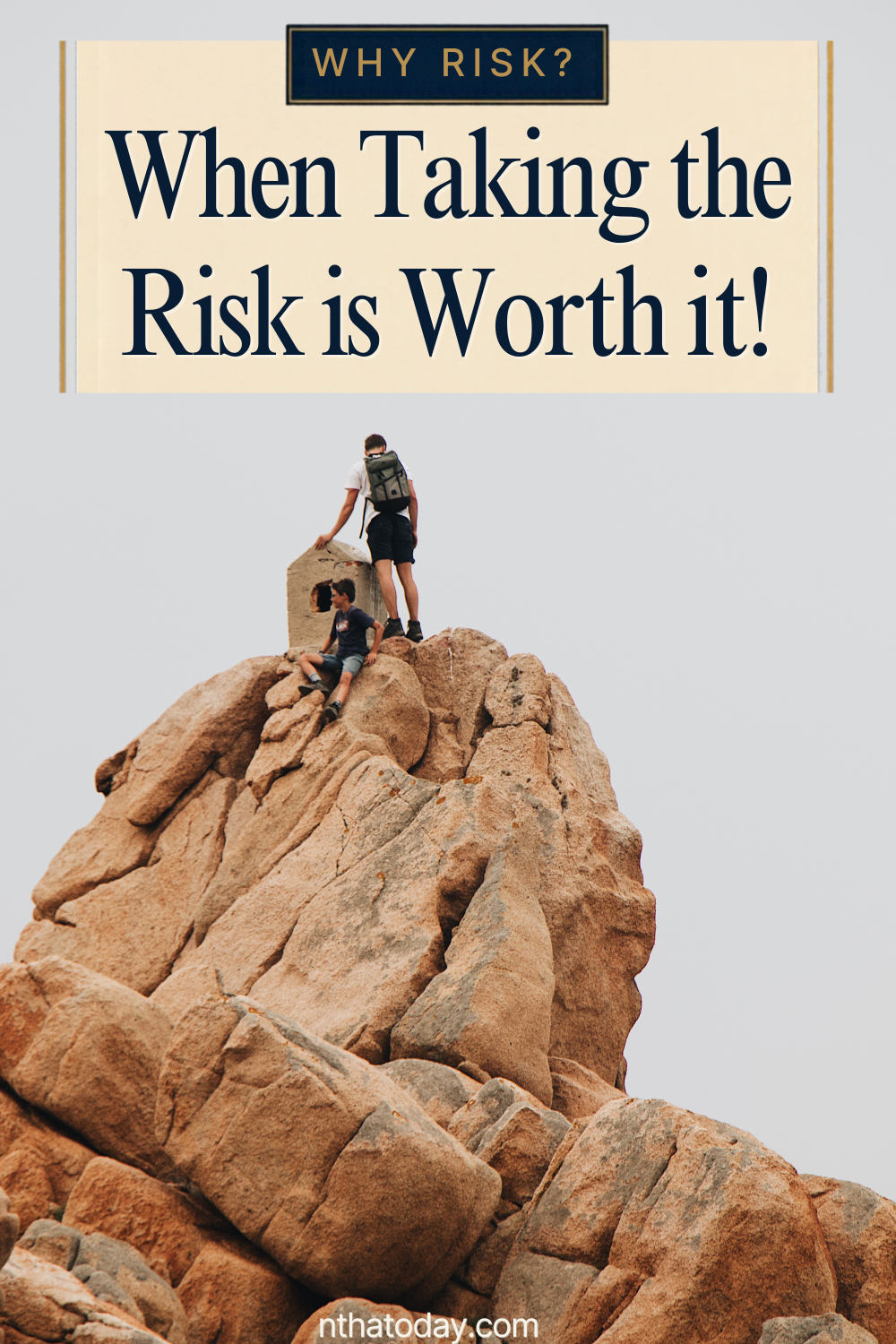
So here is my question for you this week, the same one Dr Carson was asked: why risk?
And here is his answer, which I’m borrowing as mine: why not?
Love, Everyday
Ntha
If you’d like support thinking through a decision you’ve been stuck on, book a call with me or browse the free resources on the site.
And if this spoke to you, share it with someone who needs a nudge to take their next brave step.

You May Also Like

Make a Change Today

Overcoming Self-Doubt with a Positive Outlook
